Fun, realistic, and relatable parenting advice with a side of sarcasm

6 Sensory Bin Ideas For Parents Who Like Clean Carpets
Disclosure: As a member of the Amazon affiliate program, we may earn commissions from qualifying purchases via links found in this article at no additional cost to you.
We’ve all seen the sensory bin ideas floating around social media. And sure, toddlers love sensory bins. But, why do they always look messy?
Look, I get it. Every parenting blog and developmental specialist swears by sensory bins, but they conveniently skip the part where you find quinoa embedded in your carpet fibers three months later. The mess is real. And the cleanup is brutal.
But here is the thing: sensory play actually matters for your kid’s brain development. The tactile input helps with fine motor skills, problem solving, and perhaps even emotional regulation. The good news? You do not need to sacrifice your living room to make it happen.
I have tried dozens of sensory bin setups with my own kids (and cleaned up after every single disaster), so you do not have to learn these lessons the hard way:
1. Beads in a Sealed Plastic Bag
Beads are amazing until they fall under your feet and find their way under the couch.
Here is the workaround: put the beads inside a gallon-sized ziplock bag, seal it tight, then tape the edges down with duct tape for extra insurance. Your kid gets all the colorful sensory input without a single bead escaping into the wild.
What makes this work: Kids can press, squish, and move the beads around through the plastic. The visual stimulation is identical to an open bin. You can add small plastic toys inside before sealing for an “I spy” element. The whole thing fits on a lap, highchair tray, or coffee table.
2. Pom Poms with Kitchen Tongs
Craft pom poms are lightweight, colorful, and surprisingly satisfying to grab. But they also scatter like glitter when your toddler dumps the entire bin.
The trick is pairing them with an activity that keeps them contained. Grab a muffin tin from your kitchen, a pair of plastic tongs or silicone-tipped kitchen tongs, and let your kid practice transferring pom poms from one section to another.
Silicone muffin tins work even better than a tin because they have higher edges.
Small plastic bowls from your Tupperware drawer give the same containment with easier cleanup.
An empty egg carton is perfect if you want zero cleanup since you can toss it when done.
The tongs give their little hands a serious fine motor workout. The defined sections keep pom poms from rolling under your couch. And because they are focused on the transfer challenge, they forget about flinging everything across the room.
3. Shaving Cream on a Baking Sheet
Shaving cream sensory play looks adorable on Pinterest, but the reality involves finding foam in places you did not know existed and weird residue on everything.
Do this on a rimmed baking sheet and the whole game changes. The raised edges contain the cream. The smooth surface makes cleanup a single wipe situation. And if your kid does go rogue, you just pick up the entire sheet and move it to the bathtub.
Use the cheapest foam shaving cream you can find (not gel). Spray a generous pile directly onto the sheet. Add a few drops of food coloring or small plastic toys for extra interest. Let them draw, smoosh, and explore.
Pro move: Do this activity right before bath time so any mess on their clothes is irrelevant. Keep a damp towel next to the sheet so they can wipe their hands before touching anything else.
You can also use whipped cream here if you prefer something edible.
4. Dry Pasta in a Bin or Cardboard Box
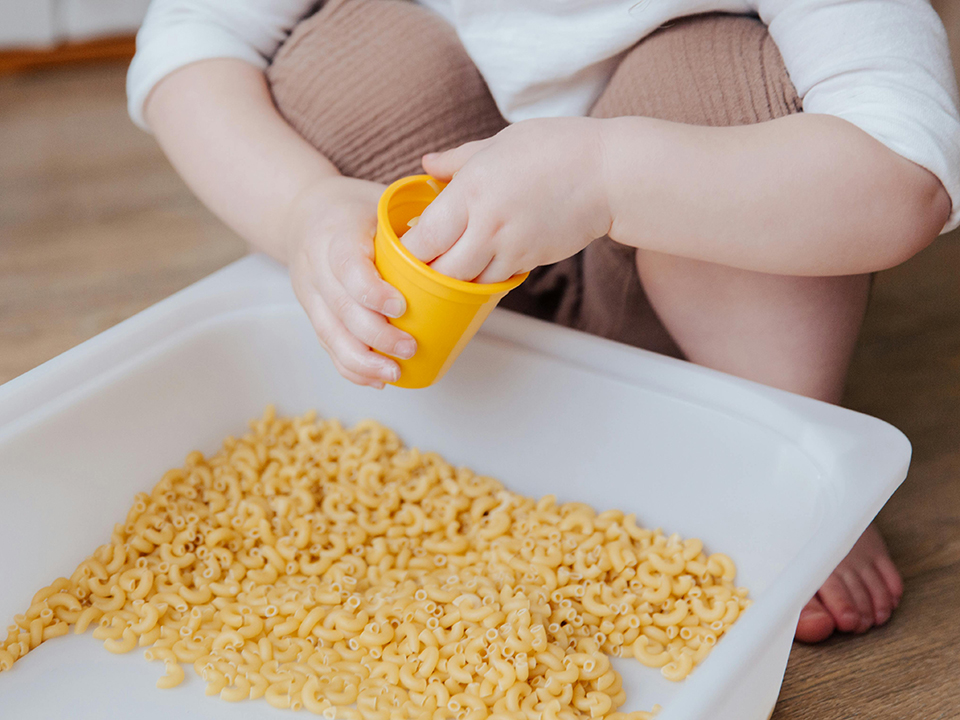
Dry pasta is a classic sensory bin filler because it is cheap, easy to scoop, and makes great sounds. But it also snaps into tiny pieces that embed themselves in every surface.
To keep the mess to a minimum, put the whole operation inside a large cardboard box with high sides. Think the kind Amazon deliveries come in. The deeper the box, the better your odds of containment.
Toss in a few cups of uncooked pasta (rotini, penne, and rigatoni work best because they do not shatter as easily as spaghetti). Add some measuring cups, small containers, or a plastic funnel. Let them go wild.
Why cardboard is better than plastic bins: The sides are higher so pasta does not fly out as easily. When you are done, you can fold the whole box closed and store it in a closet. If it gets too gross or broken down, you recycle it guilt-free and grab another box from your recycling pile.
5. Ice Cubes With Salt and (Optional) Food Coloring
Ice play is underrated because parents assume it will melt everywhere and ruin their day, but it is actually one of the easiest sensory activities to contain.
Fill a shallow plastic storage bin (the kind you use for closet organization) with ice cubes. Give your kid a salt shaker and a few small cups of water mixed with food coloring. When they sprinkle salt on the ice, it melts tiny tunnels. When they drop colored water onto the ice, it creates beautiful patterns as it seeps into the cracks.
The science is cool. The color-mixing keeps them engaged. And the whole thing melts into plain water that you dump in the sink.
Set this up on a towel or do it outside on your patio if weather allows. The melting happens slowly enough that it does not create puddles instantly. The bin contains the water as it melts. And because it is just water and food coloring, there is nothing to vacuum or scrape off surfaces.
Kitchen tools that level this up: Give them a turkey baster to suck up colored water and squirt it on ice. Add a few small plastic toys frozen inside some of the cubes for a rescue mission element.
6. Farm Animals with Grass
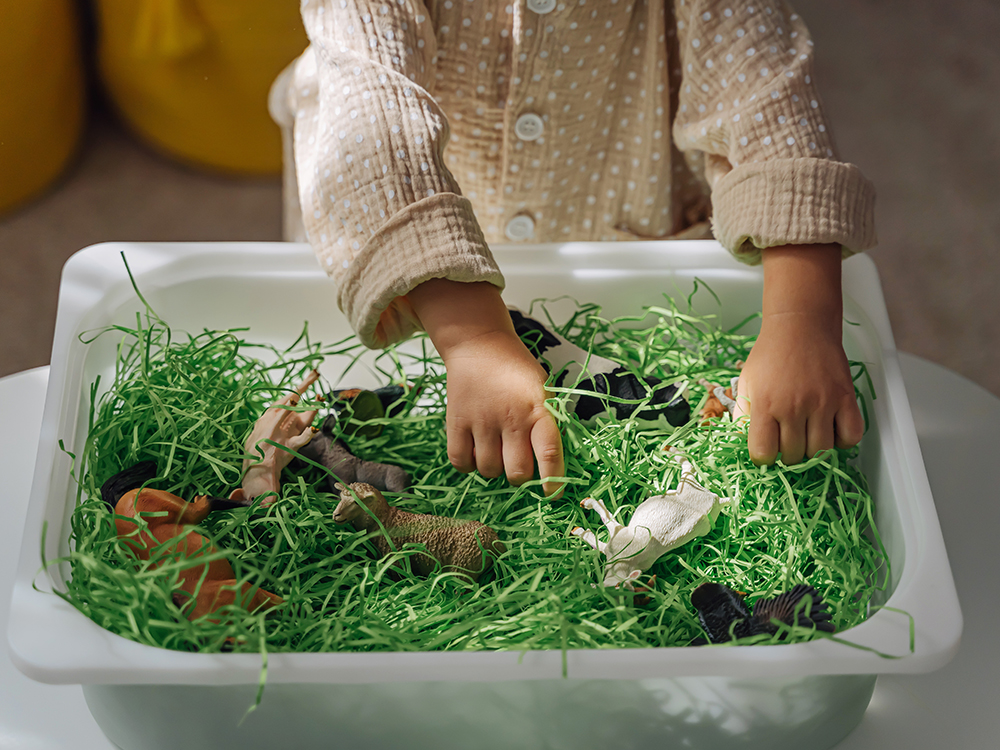
One of my favorites is to put some plastic toys (farm animals work well here) and some “Easter grass” or green shredded paper. Toddlers love the feel of the paper as they search and “rescue” the farm animals.
This idea sparks imaginative play while keeping the mess to a minimum.
Also, make sure you invest in tall bins for better containment.
The Takeaway
Sensory play does not have to mean sensory carnage. These setups prove you can give your kid the developmental benefits without turning your living room into a disaster zone that requires professional cleaning. The best part? You already own most of this stuff, and cleanup takes minutes instead of hours.
Your floors will thank you. Your vacuum will stop making that awful grinding noise. And your kid still gets to squish, pour, scoop, and explore to their heart’s content.
If you’re looking for other activities, make sure to check out this blog post on easy calming activities for toddlers.
What are your favorite sensory bin ideas? Let me know in the comments.
The content written on this website is for entertainment purposes only and is not meant to be taken as medical or professional advice. For questions or concerns, please contact us.